الرئيسية Around the world Dr. Attia Abu Rakhis from our sister country, Libya (Misrata), was a guest on the pages of our newspaper, magazine, and our international channel, Al-Maw’ed Al-Jadeed. This insightful interview ensued: (I deeply love green Tunisia and yearn for economic and cultural cooperation between Libya and Tunisia… and for opening up investment opportunities between them and reducing the bureaucratic obstacles that hinder the launch of important economic projects that would benefit both Tunisia and Libya). I believe that investment in both countries is the ideal solution for a promising future. Why can’t we form an Arab union like the European Union? These are questions I pose, and I await with hope the answers.
Dr. Attia Abu Rakhis from our sister country, Libya (Misrata), was a guest on the pages of our newspaper, magazine, and our international channel, Al-Maw’ed Al-Jadeed. This insightful interview ensued: (I deeply love green Tunisia and yearn for economic and cultural cooperation between Libya and Tunisia… and for opening up investment opportunities between them and reducing the bureaucratic obstacles that hinder the launch of important economic projects that would benefit both Tunisia and Libya). I believe that investment in both countries is the ideal solution for a promising future. Why can’t we form an Arab union like the European Union? These are questions I pose, and I await with hope the answers.

Dr. Attia Abu Rakhis from our sister country, Libya (Misrata), was a guest on the pages of our newspaper, magazine, and our international channel, Al-Maw’ed Al-Jadeed. This insightful interview ensued: (I deeply love green Tunisia and yearn for economic and cultural cooperation between Libya and Tunisia… and for opening up investment opportunities between them and reducing the bureaucratic obstacles that hinder the launch of important economic projects that would benefit both Tunisia and Libya). I believe that investment in both countries is the ideal solution for a promising future. Why can’t we form an Arab union like the European Union? These are questions I pose, and I await with hope the answers.
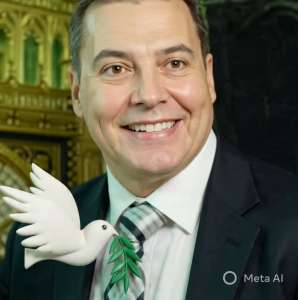
The interview was conducted by Dr. Amira Al-Ruwaigi, Chairperson of the Board of Directors and Editor-in-Chief of Al-Maw’ed Al-Jadeed International Newspaper, Channel, and Magazine.
Our loyal readers of Al-Maw’ed Al-Jadeed International Newspaper, Channel, and Magazine,
Today, we host Dr. Attia Bourkhis in a live interview from our sister country, Libya, specifically from the beautiful city of Misrata overlooking the sea. We will explore aspects of Dr. Bourkhis’s personality, a man deeply interested in the cultural, political, economic, and social affairs of his country, and also in the achievements taking place in Tunisia across all sectors. He is a lover and admirer of our green Tunisia and aspires to cooperation in many fields, especially economic exchange and the establishment of a free trade market. He spoke specifically about investment between Tunisia and Libya and what we must all do to stimulate the economic cycle with the support of both countries, making laws more responsive and flexible to market demands. He emphasized that social peace is the greatest incentive for progress towards a better tomorrow for our Libyan and Tunisian people. The first question I posed to him was:
1- What is your field of specialization? Who is Dr. Attia Abu Rakhis?
PhD Diploma/History
Engineer
Activist interested in public affairs
Interested in political, cultural, economic, archaeological, cultural, and social heritage.
Participated in several political, cultural, economic, and social forums concerned with scientific, literary, training, education, and learning aspects.
These forums were held within Libya, in neighboring Arab countries, and internationally.
Also, participated in political and social gatherings and dialogues, encouraging reconciliation and bridging the divide among the various segments of the Libyan people.
What is your vision regarding the flourishing of freedom and democracy in our two countries? What about the peaceful transfer of power, the separation of executive and legislative powers, and the independence of the judiciary?
2- Given the significant similarities in the political changes between our two countries and the aspirations of our people for a better future, including achieving social peace, economic improvement, cultural advancement, and reaching the highest levels of education and learning.
Therefore,
Our two peoples strive to consolidate democracy and a civil state through the peaceful transfer of power via free, fair, and transparent elections in which all segments of society participate.
The separation of legislative and executive powers and the independence of the judiciary.
Given the heritage of our two countries, the level of educated personnel, the accumulated cultural legacy of both nations, the aspirations of our peoples for stability, the desire to work and build, and the capabilities and potential of both nations, political stability—the cornerstone of any civilized development—can easily be achieved.
3. Cooperation in the economic field: Joint projects and a free market between our two countries, Libya and Tunisia, encouraging investment, attracting local capital between the two countries, facilitating all procedures, and removing all restrictions and obstacles to the movement of invested capital will create job opportunities for both peoples, strengthen the bonds of brotherhood and peaceful coexistence, and achieve growth, prosperity, and reconstruction. All of this is very promising. Are there clear signs of its realization, whether from Libya or Tunisia, or are these merely aspirations whose time has not yet come?
3. Given the close political, social, and cultural ties between our two peoples, including shared customs, traditions, lineage, marriage, and close neighborly relations,
therefore:
We can build upon all of this to establish sound and robust economic cooperation by implementing major joint projects between the governments of both countries, official institutions, and all sectors operating in both nations. This cooperation will serve the interests of our peoples, create job opportunities, and improve the income and well-being of citizens.
Furthermore, we should encourage capital and the private sector by streamlining regulatory procedures, removing all restrictions that might hinder the flow of capital, and promoting entrepreneurship and individual initiatives to create projects, establish companies, factories, workshops, and various crafts. This will provide employment opportunities for every citizen, improve income, raise the standard of living, and ensure access to basic necessities and a dignified life.
We should also establish a comprehensive, integrated, and diversified common market.
This cooperation will make Libya and Tunisia the nucleus of an economic market and a hub for trade, professions, crafts, and the exchange of goods with the African continent.
We are blessed with a unique advantage: our geographical location, climate, and topography. Our location on the southern Mediterranean coast and our proximity to European shores contribute to transit trade between Europe and Africa.
We must also not forget the vast wealth of various minerals and abundant natural resources that both countries possess, both on land and at sea, and underground.
These include marine resources such as fish, sponges, and other marine life, as well as gas and oil.
Even our airspace serves as a global route for air travel, passengers, and trade.
4/ Do you have a clear program and vision that would encourage the exchange of scholarships between our two countries, cooperation, and consultation in all educational, health, commercial, and expertise-related fields, including companies and specialized firms, across all sectors and frameworks?
4_Undoubtedly, given all that has been mentioned above—the good neighborliness between our two countries, the bonds of kinship and intermarriage, the cultural similarities and integration, the harmony and psychological and behavioral similarities, the shared temperament, climate, terrain, language, customs, aspirations, hopes, goals, and territorial integrity—there will be scientific and cultural cooperation in education, learning, and training. Exchanging scholarships between the two countries and encouraging students to pursue learning opportunities.
In all scientific, cultural, vocational, theoretical, and technical fields.
Training, development, and acquiring modern technology.
We possess the intellectual capacity, talents, human resources, bright minds, and sufficient ambition.
We also have the material resources, including sufficient capital and its wise investment in human capital.
5- What are the aspects of cultural cooperation between the Libyan and Tunisian peoples in education, training, development, and culture in general, including heritage, traditions, antiquities, and historical civilization?
Areas of Cooperation Between the Two Countries
In the field of education, student exchange programs will be implemented in both countries, covering all fields of education and learning, including both scientific and literary disciplines such as engineering, medicine, science, agriculture, languages, and specialized fields.
Literary disciplines include history, geography, psychology, social sciences, philosophy, and others.
Furthermore, in the field of education, we must not forget the exchange of expertise among faculty members, administrative staff, and other personnel to benefit both countries from their experience.
In the field of training, we can also benefit from the exchange of expertise and experienced personnel in training, conducting long-term, medium-term, and short-term courses in both countries, and utilizing human resources, machinery, equipment, facilities, training centers, and halls equipped with all necessary training equipment.
In the cultural field, the areas of cooperation are numerous and diverse, given the rich and long history of both countries, dating back to the dawn of history and the first human footsteps on this land. This is evidenced by historical remains, ancient cities from various periods, including the Phoenician, Roman, Byzantine, Islamic, and Ottoman eras, the era of European colonialism, and periods of liberation and independence. There is also a rich tangible and intangible heritage and a shared cultural legacy between our two peoples. This heritage is an extension of one another, influencing and being influenced by each other, due to the absence of natural barriers between our two cultures. This includes shared customs and traditions for celebrations, social, religious, and national events.
This includes everything from food and clothing to agriculture, handicrafts, pottery, copperware, silver, gold, and other crafts such as clothing and various tools.
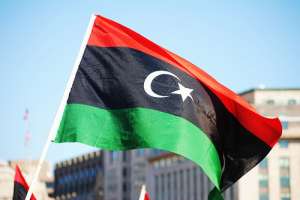
We also share knowledge of the historical sites and all that humankind has left behind throughout different eras, such as Cyrene, Sabratha, Oea, and Leptis Magna in Libya, and cities like Kairouan and others in our sister country, Tunisia.
Of course, cooperation exists and is progressing rapidly; it has never ceased. However, we call for more, for overcoming all difficulties and obstacles, and for increased attention, promotion, and governmental and private support from investors and businesspeople.
6/ The Flourishing of Freedom and Democracy in Our Countries
Peaceful Transfer of Power, Separation of Executive and Legislative Branches, and Judicial Independence
How can this be achieved?
Has Libya achieved this peaceful transfer of power, or not yet?
More precisely, after the revolution, has Libya rid itself of dictatorial rule and reached a high degree of political maturity and awareness, or not yet?
With the flourishing of freedom and the aspiration for it,
from free, fair, and transparent elections, which we have experienced since the change, and the pursuit of establishing the principle of the peaceful transfer of power, the separation of legislative and executive powers, and the independence of the judiciary,
Libya is moving with firm and irreversible steps towards advancement and progress.
Libya, with its history, civilization, vast territory, and immense potential in terms of oil and gas wealth, resources, and raw materials of various minerals, and its sea with its rich fish, sponges, and other resources.
Its location in North Africa, its coastline of approximately 2,000 km, and its proximity to the southern coasts of Europe.

This makes it a corridor for global trade, enabling the establishment of free trade zones and the revival of ancient caravan routes to the African interior with modern roads, its young workforce, and the cooperation of friends, allies, and brotherly nations,
such as our beloved green Tunisia and its railways.
With all this and more, Libya is rising and progressing thanks to its resources and its people.


رصيف الماء/بقلم الشاعرة السوربة نهلة صالح
رصيف الماء بقلم الشاعرة السورية نهلة صالح هل أخبركم أنني مستاءة؟ أم أكتفي برمي اتهاماتكم ك…

الموعد الجديد العالمية/ اهلا رمضان : اربعة قصص محفزة وملهمة عن شهر رمضان
مصر/ كتب دكتور عاصم موشى أربع قصص ملهمة محفزة عن شهر رمضان الكريم جاء …